Customers and follow-up · 5 min read
Your customers and your follow-ups, in one place
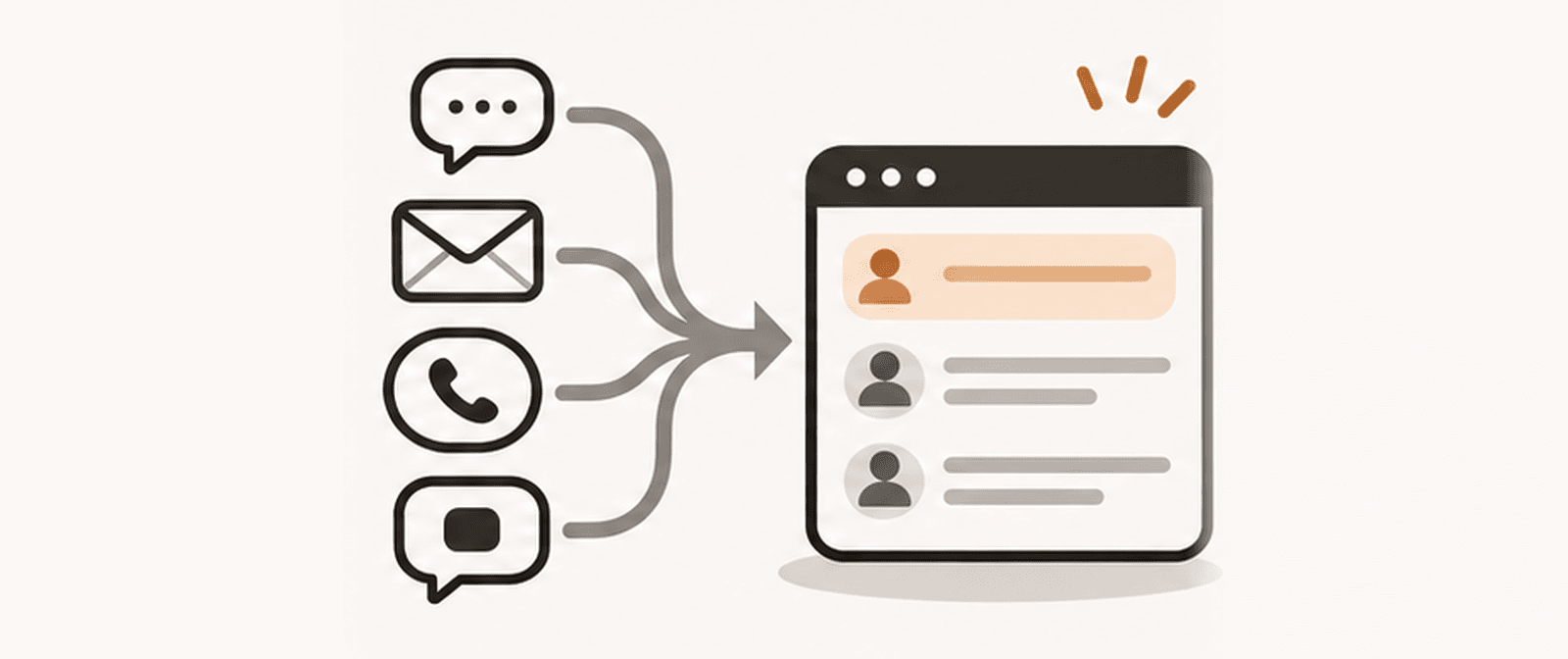
A customer is not a message. A customer is a story: they came from somewhere, asked something, someone replied, they bought or did not buy, and they may come back. When that story is scattered across phones, inboxes and each person’s memory, the business loses it one piece at a time.
A customer system, known as a CRM, brings that story together and works with it. These are the seven questions it must be able to answer about any customer, at any time.
01Where did they come from?
Today: you pay for ads, post on social media and get referrals, but you do not know which of them brought this customer. You decide where to invest by intuition.
With a system: every enquiry is recorded with its channel and, when the data exists, with the campaign and the ad behind it. You know what brings enquiries and what brings customers who actually buy.
02What did they ask for and what were they told?
Today: the conversation is in the WhatsApp of whoever handled it. If that person is out, the customer has to be asked everything again.
With a system: WhatsApp, social media, email and the site arrive in a single history per customer. Whoever has permission opens it and knows where things stand, without asking anyone to fill them in.
03How do we answer every enquiry?
Today: the ones that arrive at night or on the weekend wait, and several go cold before Monday.
With a system: an assistant answers frequent questions right away, asks for the details that are needed, books an appointment and hands a person what a person must resolve. Enquiries get a reply right away, at any hour, and whatever needs a person is recorded and assigned.
04Who is handling them and what comes next?
Today: “pending” means that someone remembers.
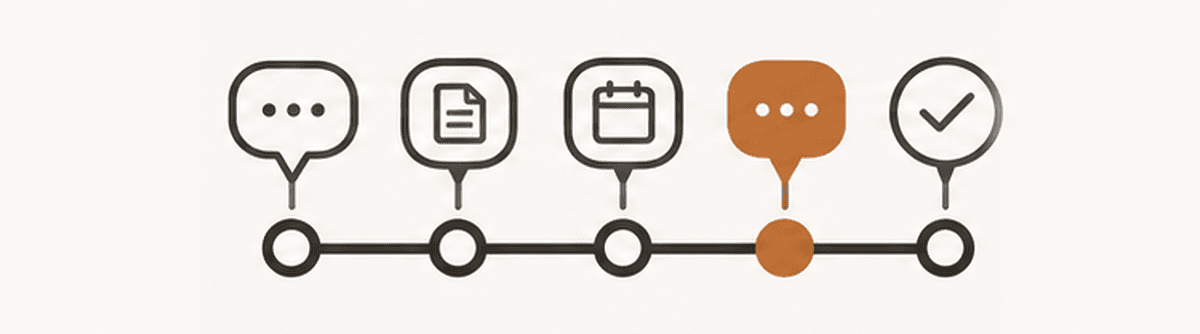
With a system: every customer has an owner, a stage and a next step with a date. Each person sees their list for the day, and whoever runs the team sees everyone’s.
05How do we write to them again?
Today: follow-up depends on someone having the time and the memory. The customer who asked for a quote and did not reply is lost in silence.
With a system: reminders and follow-up messages go out according to the rules you define: the day after a quote, before an appointment, when someone has gone too long without a reply.
06How do we keep customers coming back?
Today: the relationship ends with the sale. Nobody flags that it is time to renew, restock or come back for a visit.
With a system: the customer who already bought stays in the record, with what they bought and when. That lets you write to them at the right moment: a renewal, a recurring service, an offer they actually care about.
07What is working?
Today: you know how much you sold, but not where along the way customers are lost.
With a system: you see how many enquiries arrive, how many move forward and how many close, by channel and by person. When it applies, those results are sent back to the advertising platforms, so your ads look for more people like the ones who do buy.
Why a spreadsheet is not enough
With few customers and one person handling them, a sheet is enough. It stops being enough when there are several people and several channels. A sheet stores what someone types into it. A system does the work: it receives the messages without anyone copying them, distributes the enquiries, flags what is running late, replies outside business hours and measures the result. The difference is not where the information is stored. It is who does the work of keeping it up to date.
Three things you can check this week
- 01How many of this week’s enquiries still have no owner?
- 02Can you reconstruct the last conversation with a customer without asking whoever handled it?
- 03Do you know how many of last month’s enquiries ended in a sale?
The ones you cannot answer are the best place to start.
Where to start
You do not need to solve all seven at once. You start with the question that is costing you the most customers today, and the system grows in parts. If your site or your WhatsApp already work, they are not replaced: they are integrated.
If you want to know how organized your operation is, assess it in nine questions. If you would rather talk it through, book a 15-minute call.
Free, no commitment.